Thinking Before We Chat: AI, Sustainability, and the Power of Small Steps and Bold Action
Author: Christine Grinling & Support Partners | Published: June 29, 2026 | Reading time: 11 min
AI's environmental cost is real but manageable at two levels: infrastructure (data center providers cutting water and energy use) and behavior (organizations and individuals using AI more deliberately). Microsoft has cut water intensity 90% since the early 2000s and hit net-water-positive status in FY25, while Support Partners addresses the demand side through AIR Fusion's opt-in AI tagging and an internal AI Mandate that keeps human judgment in the loop. Neither approach works alone: supply-side efficiency is outpaced by rising AI demand (the "rebound effect"), which is why conscious consumption matters as much as cooling systems.
Key Statistics at a Glance
| Metric | Figure | Source: "Inside Microsoft’s two-decade push to cut water intensity while scaling for growth"J un 24, 2026 | Judy Priest, CVP and CTO of Cloud Operations & Innovation and Steve Solomon, VP Datacenter Engineering |
|---|---|---|
| Global data center electricity use (2024) | ~415 TWh (1.5% of world total) | Industry data cited in article |
| Data center electricity growth rate | 12% CAGR since 2017 (4x global average) | Industry data cited in article |
| Microsoft's water intensity reduction | 90% since early 2000s | Microsoft, June 2026 |
| Microsoft's current water use rate | 0.27 litres/kWh (~3x better than industry average) | Microsoft, June 2026 |
| Recycled/non-potable water use (Quincy, San Antonio, Singapore) | 74% / 79% / 99% | Microsoft, June 2026 |
| Global AI data center infrastructure spend (2025) | ~$580 billion | Industry data cited in article |
| Water used per 100-query ChatGPT session | ~0.5 litres (cooling only) | Industry data cited in article |
| American public rejection rate of new data center proposals | 70% | Industry data cited in article |
What is the environmental cost of AI right now?
The conversation around artificial intelligence and the environment is getting louder, and rightly so. Behind every AI-generated summary, every chat response, and every AI image, there's a data center drawing large amounts of energy and water.
Global data center electricity consumption reached approximately 415 terawatt-hours in 2024, about 1.5% of the world's total electricity use, and has been growing at a compound annual rate of 12% since 2017, more than four times faster than total global electricity consumption. If data centers were a country, they would already rank as the fifth-largest energy consumer in the world, sitting between Japan and Russia.
This is worrisome even in context, but it's also an area where public pushback is gaining real momentum. Citizen power is increasingly what forces responsible providers and hyperscalers to reckon with the impact of AI compute on natural and urban environments. Developers are sometimes forced to abandon projects in locations where the development would raise electricity costs, drain water, or create noise pollution for residents.
Why do communities push back against data centers?
Data centers have long been controversial. Statistics currently point to a 70% rejection rate among Americans fighting data center developments through legal and political means. These facilities, sometimes the size of tens of football pitches, consume vast resources and place strain on local utilities, often outpacing communities' ability to absorb the impact.
Water is a particular flashpoint. Cooling AI-serving servers requires enormous volumes of it, and in an era of growing water stress worldwide, that's an urgent concern. Water access is a human right, which makes this more than an efficiency question.
As a Microsoft Partner operating in the age of AI, Support Partners is consistently invested in evaluating how Microsoft is addressing this supply-and-demand problem.
How has Microsoft reduced its data center water use?
In a June 24, 2026 blog post, Judy Priest (CVP and CTO of Cloud Operations & Innovation) and Steve Solomon (VP, Datacenter Engineering) detailed Microsoft's two-decade effort to cut water intensity. Over 20 years, the company has reduced its water consumption rate by 90% compared to its earliest data centers, bringing usage down to 0.27 litres per kilowatt-hour, roughly three times better than the industry average.
The engineering timeline:
- Early facilities: high-efficiency economizing chillers running at elevated temperatures
- By 2008: direct air cooling with evaporative assist: outside air used first, water introduced only above 29.4°C, cutting consumption up to 90% versus traditional systems
- More recently: chip-level cooling that recirculates water, plus expanded use of recycled and non-potable water
- Current hub performance: Quincy (WA) at 74% recycled/non-potable water, San Antonio (TX) at 79%, Singapore at 99%
New projects in Phoenix, Arizona and Mt. Pleasant, Wisconsin will pilot zero-water evaporation designs starting in 2026, coming online by late 2027. (Support Partners has an office in Phoenix, so this one is close to home.)
Beyond its own facilities, Microsoft has committed over $25 million to water and sewer upgrades near its Leesburg, Virginia facility, and more than $500 million since 2020 toward 75+ water and wastewater infrastructure projects worldwide. Its Datacenter Community Pledge commits the company to protecting local watersheds and fully funding required system upgrades. In FY25, Microsoft replenished more water than it withdrew globally, a genuine proof point that digital growth and water stewardship can move together.
Watch: How does closed-loop cooling work at Microsoft data centers?
Is infrastructure efficiency enough to solve AI's environmental problem?
No, and this is the crux of the issue. Global spending on AI-focused data center infrastructure reached an estimated $580 billion in 2025 alone, and AI energy demand is expected to roughly double by 2026, driven mainly by large language models.
This creates what the industry calls the rebound effect: efficiency gains per unit of computation are consistently outpaced by growth in the total volume of computation being performed. Even the most water- and energy-efficient data center still faces a rising tide of demand. Infrastructure improvements alone cannot solve the sustainability challenge, which raises a question that gets far less attention than cooling systems: how much AI are we actually using, and do we need to use that much?
What's the environmental cost of an individual AI query?
Every query sent to an AI system consumes resources. A typical 100-query ChatGPT session translates to roughly 0.5 litres of water in cooling alone, before accounting for energy use. Multiply that by hundreds of millions of users making dozens of queries daily, and the aggregate impact becomes substantial.
This isn't an argument against using AI. It's an argument for using it thoughtfully. The sustainability conversation has so far been dominated by what the industry can do (better cooling, renewable energy, more efficient chips), with far less attention paid to what individual organizations and users can do to regulate their own consumption.
How does Support Partners approach AI sustainability?
Support Partners' answer starts at the point of decision, not the infrastructure level, by intentionally designing AI-native products and choosing which platforms to build on.
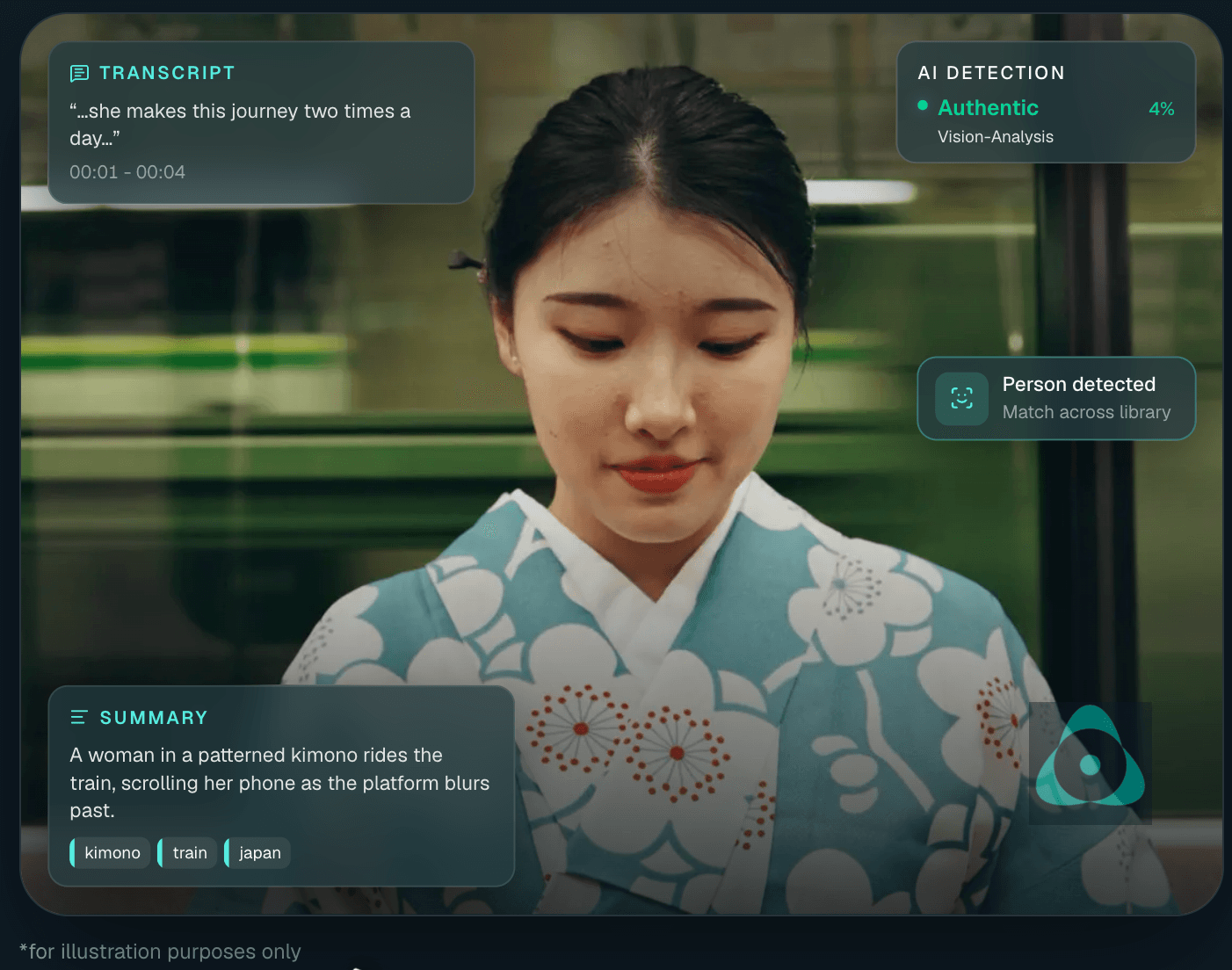
AIR Fusion, Support Partners' AI-native content intelligence platform, was built with this in mind. It lets users tag and classify content either manually or with AI assistance, so people choose how much AI involvement a task actually needs rather than defaulting to full automation. Human judgment leads; AI is a tool, not a replacement.
This is backed by two internal frameworks:
- AI Policy: governs how AI and Agentic AI are used within the organization, including how token consumption is managed
- AI Mandate: centered on Human Skills and Human-Led AI, the principle that AI should augment human capability, not erode it
Together, AIR Fusion and these internal frameworks form a coherent answer to the demand side of the sustainability question: rather than treating AI consumption as fixed and offsetting it elsewhere, Support Partners builds conditions for conscious use directly into its product and culture.
What does a complete AI sustainability strategy look like?
Progress requires action at two levels simultaneously:
- Supply side: infrastructure providers continuing to innovate, including zero-water cooling, renewable energy, community investment. Essential, but insufficient alone, since demand growth keeps outpacing efficiency gains.
- Demand side: a culture of conscious consumption, organizations and individuals asking, before reaching for an AI tool, do I actually need this, and am I using it thoughtfully?
AIR Fusion builds that second question into the workflow itself, making the choice between human tagging and AI assistance explicit rather than assumed. Paired with an internal culture guided by the AI Mandate, this reflects sustainability as a matter of both engineering and design, not cooling systems alone.
Community consultation and thoughtful data center placement remain essential too, and regulation still lags behind the pace of AI development. As this new era evolves, continuous evaluation, at the infrastructure level and the usage level, is what will shape what happens next for natural resources and the environment.
FAQ
What percentage of global electricity do data centers use? Data centers accounted for approximately 1.5% of global electricity consumption in 2024, around 415 terawatt-hours, growing at 12% annually since 2017.
How much has Microsoft reduced its data center water usage? Microsoft has cut its water consumption rate by 90% since its earliest data centers in the early 2000s, now using 0.27 litres per kilowatt-hour, about three times better than the industry average.
What is the "rebound effect" in AI sustainability? The rebound effect describes how efficiency gains per unit of AI computation are outpaced by growth in the total volume of computation performed, meaning infrastructure improvements alone can't offset rising overall demand.
How much water does a ChatGPT session use? A typical 100-query ChatGPT session uses roughly 0.5 litres of water for cooling alone, not counting energy consumption.
What is AIR Fusion? AIR Fusion is Support Partners' AI-native content intelligence platform, which lets users choose between manual and AI-assisted content tagging rather than defaulting to full automation, supporting more conscious AI use.
Did Microsoft achieve water positivity? Yes. In fiscal year 2025, Microsoft replenished more water globally than it withdrew across its operations.